Recipe Log Book: Elevating Your KDP Portfolio with Professional Interiors
In the expansive world of Amazon Kindle Direct Publishing, success often hinges on the intersection of niche relevance and production quality. For creators operating in the low or no-content space, the Recipe Log Book represents a perennial staple that continues to evolve alongside consumer habits. While digital recipe apps dominate quick searches, a significant demographic still craves the tactile experience of curating, testing, and preserving family culinary traditions in physical form. This enduring demand creates a stable opportunity for publishers, provided they move beyond generic templates and offer interiors that reflect modern usability standards.
The shift toward high-quality, functional journals has redefined what buyers expect from self-published notebooks. It is no longer sufficient to upload lined paper with a basic title page. Today’s successful KDP entrepreneurs understand that a Recipe Log Book must serve as both a practical tool and an heirloom-quality artifact. By utilizing a professionally designed interior that is ready to upload, publishers can bridge the gap between amateur publishing and boutique stationery brands. This approach not only satisfies customer expectations but also streamlines the production workflow, allowing creators to focus on marketing and portfolio expansion rather than graphic design troubleshooting.
The Evolution of Culinary Documentation in the Digital Age
Why does a physical Recipe Log Book remain relevant when smartphones are ubiquitous in the kitchen? The answer lies in the changing nature of how we value information. Digital fatigue is real, and many home cooks are seeking screen-free zones, especially during meal preparation. A physical log offers a sensory connection to cooking that a tablet cannot replicate. Furthermore, the act of handwriting recipes has been shown to improve memory retention and emotional connection to the content. For your target audience—ranging from young professionals establishing their first households to seasoned hobbyists preserving generational knowledge—the book is not just a storage vessel; it is a mindful practice.
This cultural shift impacts how you should approach your KDP business. Buyers are looking for layouts that accommodate modern recipe structures, including sections for dietary notes, prep times, and ingredient substitutions. They want spaces that feel organized yet personal. When you provide a Download exclusive Recipe Log Book KDP Interior instantly with PDF, you are offering a solution that acknowledges these nuanced user needs. The interior must balance structure with freedom, providing enough guidance to be useful while leaving ample room for the messy, creative reality of cooking. This alignment with current lifestyle trends transforms a simple notebook into a desirable product that solves a specific problem for the end-user.
Technical Precision as a Competitive Advantage
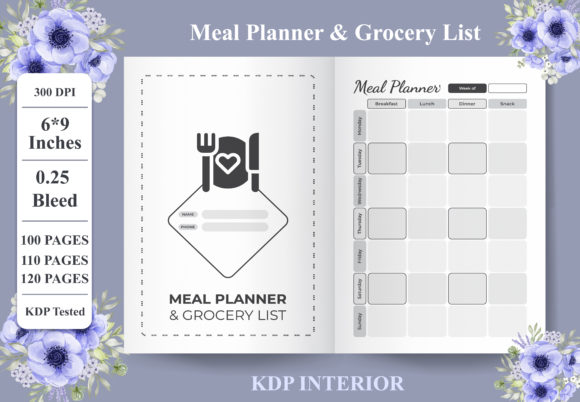
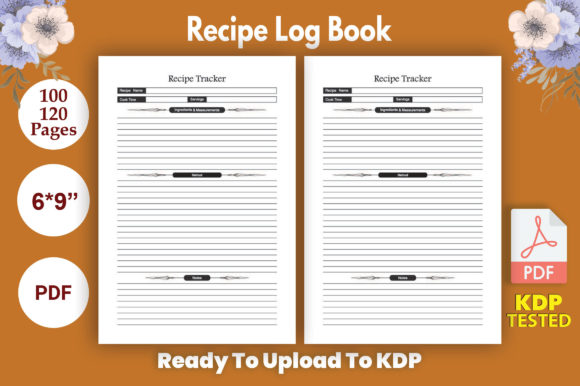
One of the most common pitfalls in the low-content publishing space is technical rejection or poor print quality due to formatting errors. Amazon’s printing specifications are rigorous, and margins, bleed areas, and resolution requirements must be exact. A professional-grade interior eliminates this friction point. The featured KDP Interior features include a precise Size 6x9″ Inches with bleed, which is the industry gold standard for portable yet spacious journals. This dimension strikes the perfect balance: large enough to write comfortably on a countertop, yet compact enough to store in a drawer or bag.
Equally critical is the assurance that the file is KDP TESTED- to ensure quality. Many creators lose valuable time fixing pixelated graphics or misaligned margins after receiving a proof copy. By securing a READY TO UPLOAD interior on Amazon KDP Kindle Direct Publishing, you bypass the trial-and-error phase entirely. High-resolution interiors ensure that lines are crisp, text is legible, and any decorative elements appear sharp rather than muddy. In a marketplace where customers leave reviews based on print clarity, technical excellence is your first line of defense against negative feedback and returns.
Strategic Benefits for Low-Content Publishers
For entrepreneurs managing a portfolio of multiple titles, efficiency is currency. Creating a custom interior from scratch requires either advanced design skills or the budget to hire freelancers, both of which eat into profit margins and delay launch timelines. Accessing a pre-formatted, tested interior allows you to pivot quickly to trending sub-niches within the culinary category. Perhaps there is a surge in interest for sourdough baking logs, vegan meal planners, or cocktail recipe books. Having a reliable base template enables you to capitalize on these micro-trends without reinventing the wheel each time.
Moreover, consistency builds brand recognition. If you plan to publish a series of kitchen-related journals, using standardized interiors ensures a cohesive user experience across your catalog. Customers who love the layout of your general Recipe Log Book will trust that your specialized versions maintain the same quality. The 100–120 pages specification is strategically chosen to hit the sweet spot for perceived value and spine width. Books in this page range have a substantial enough spine to display a title clearly on a shelf, distinguishing them from flimsy pamphlets, while keeping printing costs low enough to maintain healthy royalties.
Design Elements That Drive User Satisfaction
Understanding the anatomy of a successful recipe log helps explain why specific interior features matter. A superior interior goes beyond blank lines. It anticipates the user's workflow. Consider the inclusion of dedicated fields for:
- Source Attribution: Space to note whether a recipe came from a grandmother, a website, or original experimentation.
- Rating and Modification Systems: Areas to track changes made over time, turning the book into a living document of culinary improvement.
- Index Pages: Pre-formatted tables of contents that allow for easy navigation as the book fills up.
- Conversion Charts: Reference materials at the back of the book add utility and reduce the need for external resources.
When you download an exclusive interior, verify that these elements are integrated thoughtfully. The layout should guide the hand naturally across the page. Margins must account for the gutter so that writing near the binding remains comfortable. These subtle design choices signal to the buyer that the creator understands their needs. In the low-content space, "content" may be minimal, but "utility" must be maximal. The best-selling books are those that function as well as they look.
Navigating Market Saturation with Quality Assets
Critics often argue that the recipe journal market is saturated. While it is true that thousands of options exist, the market for high-quality, professionally formatted journals remains underserved. Most competition consists of hastily assembled PDFs with formatting glitches or outdated designs. By positioning your product as a premium alternative through superior interior specs, you differentiate yourself from the noise. Your marketing copy and cover design should reflect this internal quality. Highlight the bleed settings, the page count, and the tested status as key selling points.
Additionally, consider the versatility of a standardized 6x9 interior. This size works equally well for savory dinner logs, dessert collections, beverage trackers, or even gardening-to-table harvest records. The flexibility of a well-designed Recipe Log Book interior allows you to test various keywords and niches using the same foundational asset. This reduces risk; if one angle underperforms, you can easily pivot to another without additional design investment. For freelancers and side hustlers, this agility is essential for sustainable growth.
Practical Implementation for Immediate Launch
Integrating a downloaded interior into your workflow should be seamless. Upon acquiring your Download exclusive Recipe Log Book KDP Interior instantly with PDF, the immediate next step is cover creation. Ensure your cover dimensions match the 6x9 interior with bleed exactly. Use Amazon’s cover calculator to generate the correct template based on the 100-120 page count and paper type (typically white or cream for recipe books). Cream paper is often preferred for culinary journals as it reduces glare and evokes a vintage, warm aesthetic, but white paper offers higher contrast for detailed graphics.
Before hitting publish, always order a physical proof or use the digital previewer meticulously. Even with a KDP TESTED file, verifying that your cover aligns perfectly with the interior margins is crucial. Check that no text falls into the safe zone violation area. Once confirmed, your listing is ready. Focus your backend keywords on long-tail phrases that describe the specific utility of the book, such as "blank cookbook with index," "family recipe organizer," or "kitchen journal for beginners." These terms connect your high-quality interior with the specific intent of searchers who are tired of sifting through low-effort alternatives.
Ultimately, the Recipe Log Book is more than a product; it is a service to a community of cooks and memory-keepers. By leveraging professional, ready-to-upload interiors, you honor that community with a tool worthy of their efforts. You also build a more resilient, efficient publishing business capable of adapting to future trends. In an era where digital ephemera dominates, the tangible, well-crafted book retains a unique power. Providing that quality starts with the foundation: a meticulously designed, technically flawless interior that respects both the creator’s time and the user’s experience.